Stuck in Your Head on Purpose: How Indie Producers Are Engineering Hooks That Hit Like Classic Jingles
Let's be honest for a second. You probably haven't seen a Meow Mix commercial since the early 2000s, and yet — meow meow meow meow, meow meow meow meow — there it is. Fully intact, perfectly recalled, sitting somewhere in your brain like it pays rent. That's not an accident. That's neuroscience doing exactly what it was designed to do.
Now indie producers are taking notes.
In a streaming landscape where over 100,000 tracks get uploaded to Spotify every single day, the challenge isn't just making good music anymore. It's making music that sticks — fast, hard, and without a seven-figure marketing budget. And a growing number of independent artists across the US are turning to the science of earworms to do exactly that.
Why Your Brain Can't Let Go
The phenomenon researchers call an "involuntary musical imagery" episode — what the rest of us just call getting a song stuck in our heads — isn't random. According to cognitive psychology research, earworms tend to share a handful of structural features: a simple, upward-moving melodic shape, a slightly unexpected interval or rhythm that creates a sense of tension, and — most importantly — repetition that rewards the brain without boring it.
James Kellerman, a Nashville-based indie producer who's been quietly building a reputation for hooks that outlast the playlists they land on, puts it plainly: "Your brain is a prediction machine. It wants to finish the pattern. If your hook sets up a pattern and then delivers on it just slightly differently each time, you've basically hijacked the reward system."
That's the Meow Mix trick in a nutshell. The jingle is four notes. Four notes, repeated. But the rhythm shifts just enough each cycle to keep the brain re-engaging. It never gets boring because it never fully resolves in a way that signals done.
The Simplicity Trap (And How to Escape It)
Here's where a lot of indie artists get tripped up. They hear "simple hooks work" and they write something so stripped down it's forgettable instead of memorable. There's a difference, and it matters.
Memorable simplicity has specificity. Think about the opening piano riff of Nelly's "In the Air Tonight" cover, or the whistle in Otis Redding's "(Sittin' On) The Dock of the Bay." Simple? Yes. Generic? Absolutely not. Each one has a sonic fingerprint — a texture, a timbre, a rhythmic quirk — that makes it feel like it couldn't belong to any other song.
Diana Chu, an indie artist based in Portland who produces under the name Threadbare Claw (yes, she named herself after her cat), spent two years studying jingle composition before applying it to her own releases. "I used to think memorable hooks were about being clever," she says. "Now I think they're about being specific. One weird note choice. One syncopated beat that catches you off guard. That's the thing your brain grabs onto."
Her track "Salt Lick" — which she describes as "a jingle for a product that doesn't exist" — accumulated over 200,000 streams without a single playlist pitch. Listeners kept coming back to add it to their own playlists. The hook is eight seconds long and uses a descending melody that resolves a half-step lower than expected. That's it. That's the trick.
Placement Is Half the Formula
Earworm science doesn't stop at melody. When you deploy your hook matters just as much as what the hook actually is. Commercial jingle writers figured this out decades ago — you don't bury the brand name at the end. You lead with it, repeat it, and close with it.
Streaming has its own version of this logic. In an era where the average listener decides whether to skip within the first seven seconds, the hook can't live at the one-minute mark anymore. It has to show up early, and it has to make a promise the rest of the song will keep.
Kellerman structures his productions around what he calls "the three-touch rule": the hook hits in some form within the first ten seconds, returns fully formed before the 45-second mark, and closes out the track. "Listeners need to feel like they already know the song before the song is over," he explains. "That familiarity is what makes them come back."
This isn't a new idea — it's basically the architecture of every pop song ever written — but indie producers are getting more intentional about applying it rather than stumbling into it.
The Cat-Brain Connection
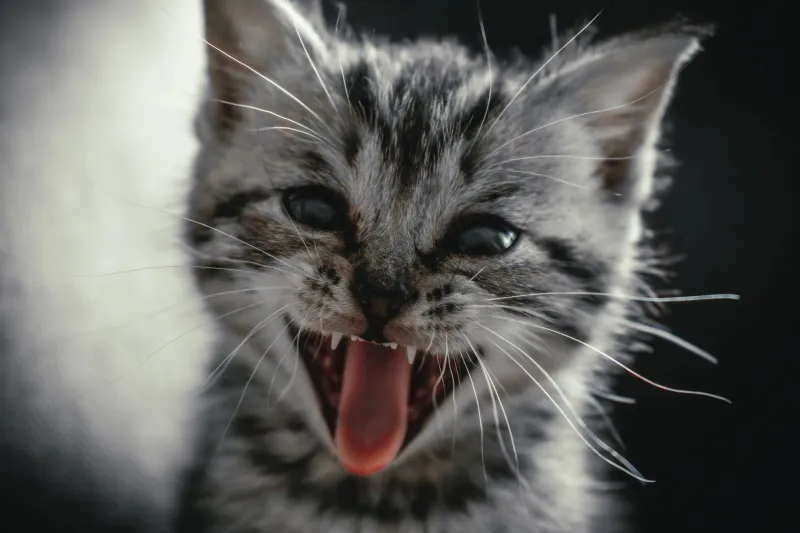
Here at Cat Music, we'd be failing our mission if we didn't point out the obvious parallel: cats are also wired for repetition and pattern recognition. Watch your cat track a moving toy and you'll see the same cognitive loop at work — anticipation, engagement, reward, reset. The best earworms run on the same cycle.
There's something almost poetic about the fact that the most iconic earworm in American commercial history was written for a cat food brand. The Meow Mix jingle works on humans for the same reason it might theoretically work on cats: it's a simple, recurring pattern with just enough variation to keep the brain from tuning out.
Indie producers who've internalized this aren't writing jingles. They're writing music that uses jingle logic — economy, repetition, specificity, strategic placement — in service of something with actual emotional depth.
Making It Work Without Selling Out
The concern a lot of indie artists raise when this conversation comes up is a valid one: doesn't engineering your hooks this deliberately make the music feel calculated? Inauthentic?
Chu pushes back hard on that. "Every rule of composition is a tool someone figured out by noticing what worked," she says. "Using music theory isn't selling out. Using earworm science isn't selling out. It's just understanding your craft at a deeper level."
Kellerman agrees, but adds a caveat. "The artists who do this badly are the ones who use the formula and stop there. The artists who do it well use the formula as a foundation and then build something real on top of it. The hook gets people in the door. The song is what makes them stay."
The Takeaway
Streaming saturation isn't going away. If anything, the flood of new music is going to keep accelerating. In that environment, the artists who survive aren't necessarily the most talented — they're the ones who understand how to make their music land in a listener's memory and stay there.
The Meow Mix jingle is still living in your head after three decades. That's the standard. It sounds absurd, but it's also kind of the whole game.
Figure out your four notes. Make them specific. Put them somewhere the listener can't miss. And then build something worth remembering around them.
Your cat already knows how to demand attention without saying much. Maybe it's time your music learned the same trick.