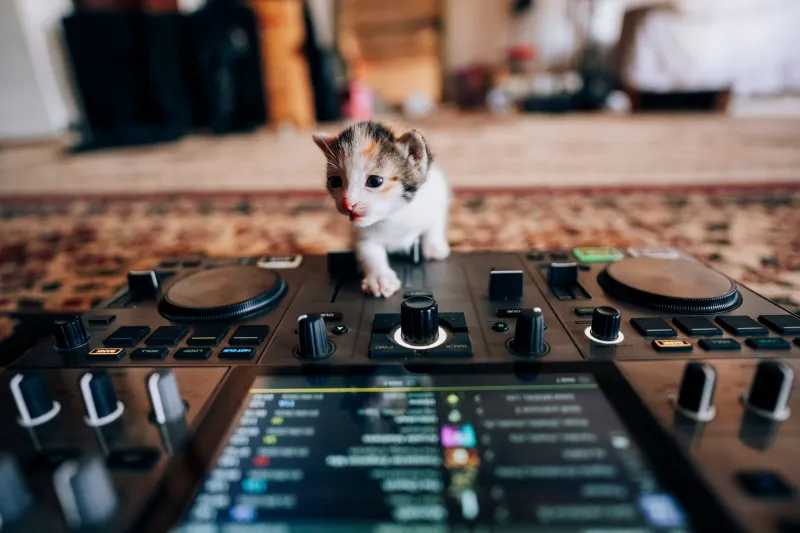
Beyond the Hook: How Indie Artists Are Letting Cat Vocalizations Rewrite the Rules of Song Structure
Somewhere between a 2 AM studio session and a cat demanding breakfast, a few indie producers started asking a genuinely strange question: what if the way cats talk is actually a better songwriting model than anything they learned in music theory class?
It sounds like a joke. It isn't.
A loosely connected but growing community of independent musicians across the US — from bedroom producers in Portland to experimental vocalists in Detroit — has been quietly studying feline communication not as a quirky gimmick, but as a structural framework. The result is a body of work that sounds nothing like what radio taught us a song should be.
Cats Don't Do Choruses (And Maybe We Shouldn't Either)
Here's the thing about cats: they don't repeat themselves for emphasis. A meow at 7 AM when the food bowl is empty is a completely different sound than a meow at midnight when your cat just wants to be near you. Same word, wildly different meaning — shaped entirely by context, urgency, and what came right before it.
That's the opposite of how most pop songs work. Traditional structure leans hard on repetition. The chorus comes back around because familiarity feels good. The hook is designed to lodge in your brain through sheer frequency.
But indie artists experimenting with feline-inspired composition are deliberately moving away from that. Instead of building toward a predictable return, they're constructing songs that shift based on emotional accumulation — the way a cat's vocal register changes not on a schedule, but in response to what's actually happening in the room.
Producers working in this space describe it as building "responsive architecture" into a track. The song doesn't repeat a section because it's time to repeat it. It revisits, transforms, or drops entirely based on where the emotional thread leads.
The Vocabulary of the Meow
What makes cat vocalization such a rich source of inspiration is its actual complexity. Cats developed the meow almost exclusively to communicate with humans — adult cats rarely meow at each other. That means it's an evolved, context-sensitive language built specifically for cross-species communication.
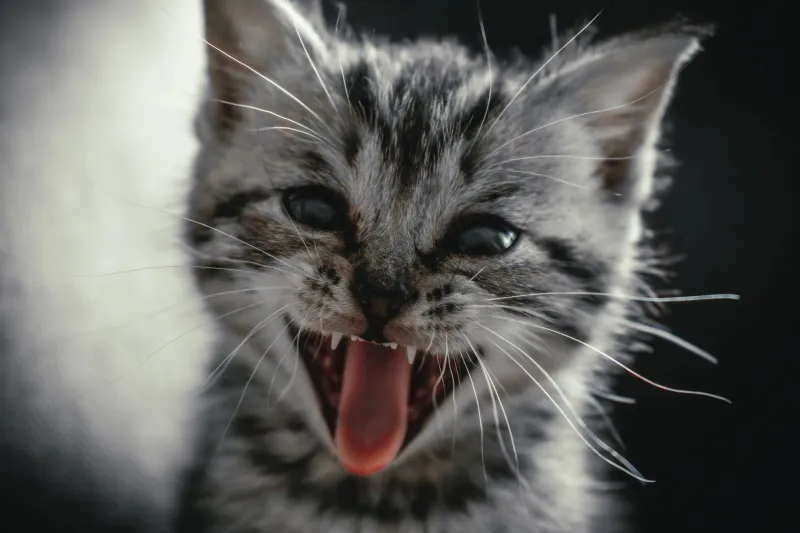
Bioacoustics researchers have identified a surprisingly wide range of distinct vocalizations: the standard meow, the trill (that rolling, chirping sound cats make as a greeting), the chirp or chatter (usually aimed at birds through a window), the yowl, the purr, and the silent open-mouth expression that looks like a meow but produces no sound at all.
Each carries specific emotional and intentional weight. And crucially, cats layer these sounds in sequence to build meaning — a trill followed by a meow followed by a slow blink is a complete communicative act, not just three random noises.
Indie artists are mapping this onto arrangement logic. Think of the trill as an intro that signals warmth and invitation. The chirp as a moment of heightened attention or tension. The yowl as a climactic emotional release. The silent meow — that one's become a favorite for representing space, breath, and the emotional weight of what's not said in a song.
Vocal Layering Inspired by Feline Frequency
Beyond arrangement, cat vocalizations are influencing how indie artists approach layering vocals and textures in production.
Cats communicate in frequency ranges that overlap significantly with the human voice — which is part of why we're so responsive to them. A cat's meow sits roughly in the 300 Hz to 1 kHz range, hitting the same sweet spot that makes a human voice feel intimate and present in a mix.
Producers have started using this as a mixing philosophy. Rather than stacking vocals for power or fullness, they're layering them the way a cat builds a vocal sequence — each layer adding contextual nuance rather than volume. A lead vocal carries the main emotional content. A lower, quieter layer underneath functions like a purr: constant, grounding, felt more than heard. A higher, breathy layer above behaves like a trill — present at key moments, then gone.
The effect is less about sounding big and more about sounding alive. Listeners often describe these mixes as having a strange intimacy, like the song is responding to them rather than performing at them.
Non-Linear Doesn't Mean Formless
One pushback that comes up when artists talk about this approach is the assumption that abandoning traditional structure means abandoning coherence. That's not what's happening here.
Cat communication is non-linear, but it isn't random. There's a logic to the sequence — an internal grammar shaped by emotional state, environmental context, and relationship history. Cats who live with the same person for years develop highly personalized vocal patterns. The communication gets more efficient, more layered, more specific over time.
Indie artists are chasing that same quality. The goal isn't to make songs that are confusing or self-indulgent. It's to build tracks that have their own internal logic — one that feels earned rather than inherited from a formula that was already old when Blink-182 was using it.
Some producers are literally mapping out their arrangements using what they call "cat conversation diagrams" — visual representations of how a cat's vocal pattern unfolds over a real interaction, then using that map as a template for where sections of a song start, shift, and resolve.
Why This Is Landing Right Now
There's a cultural reason this approach is resonating in 2024. Listeners — especially younger US audiences — are increasingly fluent in non-linear storytelling. TikTok trained an entire generation to find meaning in fragmented, context-dependent content. Podcast culture has normalized long-form narrative without a traditional hook structure. The appetite for songs that unfold differently is genuinely there.
And cats, weirdly, are a perfect bridge. They're everywhere in internet culture. Their communication style is something millions of people engage with daily without ever thinking of it as a language. When an artist makes that connection explicit — when the song feels like a conversation with a cat even if the listener can't articulate why — it creates a specific kind of emotional resonance that's hard to manufacture any other way.
The Meow as a Compositional Philosophy
What started as a late-night observation about feline behavior has turned into a legitimate compositional framework for a growing slice of the indie world. The meow motif isn't about sampling cat sounds or writing songs about cats (though both of those things are also happening). It's about using the structural logic of how cats communicate — non-linear, context-sensitive, emotionally layered — as a blueprint for building music that feels more human precisely because it learned something from an animal.
If you've been listening to indie releases lately and noticed certain tracks feel different without being able to say exactly why — less predictable, somehow more present — there's a chance a cat had something to do with it.
And honestly? That tracks.