Living by the Cat Clock: How Indie Musicians Are Letting Feline Body Rhythms Unlock Perfect Song Timing
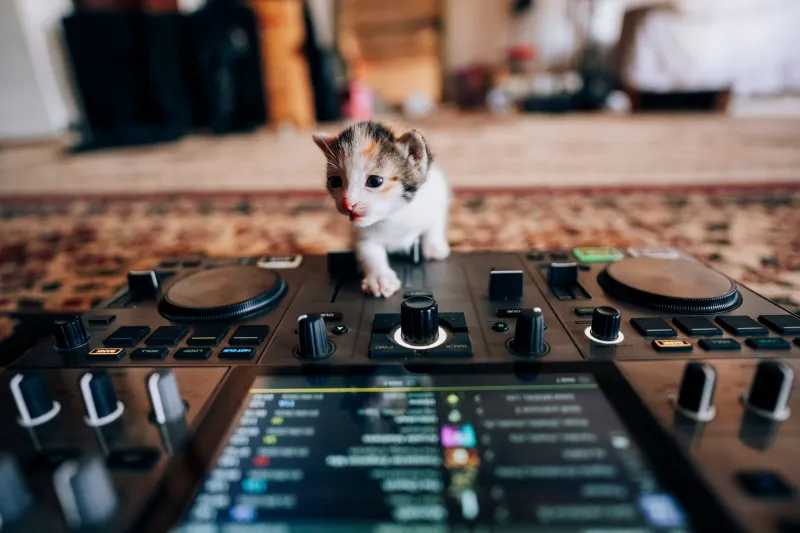
There's a moment most cat owners know well. It's somewhere around 5:30 in the morning. The room is still dark, the world is quiet, and then — out of nowhere — your cat is absolutely losing it. Sprinting down the hallway. Batting at the blinds. Demanding breakfast with the energy of someone who just drank three espressos.
For most people, this is an inconvenience. For a growing number of indie musicians, it's a scheduling cue.
Across home studios from Portland to Atlanta, artists are paying closer attention to their cats' natural behavioral patterns — the zoomies, the deep naps, the slow twilight stretches — and using those rhythms as a loose but surprisingly effective framework for structuring their creative workdays. The logic is quirky, sure. But the results? A lot of these producers say they're turning out tighter, more emotionally dynamic work than ever before.
What the Cat Clock Actually Looks Like
Here's the biology behind it. Cats are crepuscular animals, meaning they're hardwired to be most active around dawn and dusk. In between those peaks, they cycle through lighter active periods and deep rest phases — sometimes logging 12 to 16 hours of sleep a day, but rarely all at once. It's a highly tuned biological rhythm built around hunting patterns that go back thousands of years.
For musicians, that rhythm maps onto something surprisingly familiar: the idea that creative energy isn't linear. You don't just sit down and produce at full throttle for eight hours. You peak, you rest, you return. The cat is essentially modeling a workflow that a lot of productivity researchers have been pushing for years — just, you know, with more fur and fewer LinkedIn posts about it.
Rachel Osei, a lo-fi producer based in Nashville, started tracking her cat Biscuit's activity patterns after noticing that her best sessions seemed to happen when Biscuit was also in an active, engaged mood. "I thought it was a coincidence at first," she says. "But then I started paying attention and realized — when Biscuit is in chill mode, I'm fighting the session. When she's up and curious, I'm locked in. We were syncing up without me even realizing it."
Dawn Hours: The Rough Draft Window
That early morning burst of feline energy? Producers are using it for raw ideation. The crepuscular peak aligns with a mental state a lot of artists describe as pre-rational — you haven't fully talked yourself out of weird ideas yet. The internal critic hasn't fully booted up.
Marco Delgado, an indie bedroom producer out of Albuquerque, calls this his "cat window." "My cat Tortilla goes absolutely feral between like 5 and 7 AM. I used to be annoyed. Now I just get up with her and lay down rough ideas. No headphones, no mixing, just voice memos and chord progressions. The ideas I get in that window are rawer but also more honest. Less overthought."
There's something to the pacing here too. Early active cat energy is quick, instinctive, non-linear. It's not a great time for detailed editing — but it's perfect for throwing out ten hook ideas and seeing what sticks.
Midday Slump: When Your Cat Naps, You Mix
By mid-morning, most cats have cycled down into a long rest phase. This is when the studio gets quiet, the energy drops, and — if you're paying attention — it's actually the ideal window for technical work.
Mixing and mastering require a different kind of attention than writing. You need patience, precision, and the ability to make small decisions consistently over a long stretch of time. That's not a high-energy task. That's a slow, methodical one. And a cat snoring softly in the corner? Turns out that's a weirdly effective ambient cue to settle in and do the detail work.
"I used to fight the afternoon drag," says Keisha Monroe, an indie R&B artist based in Chicago. "Now I just lean into it. If my cats are knocked out, I put on my headphones and do EQ work, automation, the stuff that needs focus but not inspiration. I've stopped trying to write during that window and honestly my mixes are cleaner because of it."
Dusk Energy: The Golden Hour for Arrangement
As the day winds down and the light shifts, cats perk back up. This second crepuscular peak — usually somewhere between 4 and 7 PM depending on the season — tends to be a little more social and exploratory than the morning burst. Cats investigate, stretch, interact. It's curious energy rather than frantic energy.
For producers, this window is showing up as the sweet spot for arrangement work. You're not starting from scratch, but you're not in the weeds of mixing either. You're looking at the whole track, moving sections around, asking structural questions. That kind of zoomed-out thinking pairs well with the exploratory, slightly restless energy of a cat in late-afternoon mode.
Delgado puts it this way: "Tortilla does this thing at sunset where she walks around the whole apartment like she's doing an inspection. I feel that. That's when I'm doing my arrangement pass — walking through the whole song, checking what's working, what needs to move."
Is This Just Vibes, or Is There Something Real Here?
Fair question. There's no peer-reviewed study saying "sync your DAW to your cat's circadian rhythm and your BPM will be perfect." But what these artists are actually doing — whether they frame it in feline terms or not — is building a structured creative routine that respects the natural ebb and flow of human energy and attention.
Sports psychologists and performance coaches have been preaching this for decades. Elite athletes don't train at max intensity all day. They peak, recover, and peak again. The same principle applies to creative work. The cat just makes it more visible — and, honestly, more fun to talk about.
What's interesting is how the framing itself changes behavior. When Rachel Osei thinks of her midday slump as "Biscuit's nap time," she stops fighting it and leans in. The reframe removes guilt and replaces it with permission. Permission to rest, to switch modes, to stop forcing inspiration when the conditions aren't right.
Building Your Own Cat Clock
If you want to experiment with this, you don't need any fancy gear. Just spend a week casually noting when your cat is active, when they're resting, and when they seem most social or explorative. You'll start to see patterns — and you might be surprised how closely they mirror your own natural energy rhythms.
Then, instead of fighting your slow hours or burning yourself out during your peak windows, try matching the type of work to the energy of the moment. Raw writing when the cat's bouncing off the walls. Technical edits during the long nap. Structural review when they're doing their evening walkabout.
It's not a rigid system. It's more like a loose guide from an animal that's been perfecting its daily rhythm for thousands of years.
Your cat has been trying to tell you something about pacing this whole time. Maybe it's finally worth listening.