Beating at 140 BPM: Why Indie Producers Are Sampling Cat Heartbeats to Make Listeners Actually Feel Something
There's a moment in a lot of indie tracks where something just lands. You can't always explain it. The chord isn't particularly unusual. The melody isn't doing anything revolutionary. But something in the rhythm makes your chest tighten in the best way, like the song already knows you.
For a small but growing circle of experimental producers, that feeling isn't accidental — and it doesn't come from a drum machine. It comes from a cat.
The Science Behind the Purr (and the Pulse)
Here's the thing about cats that most people don't think about until someone tells them: a resting domestic cat's heart beats somewhere between 140 and 220 times per minute. That's nearly double the average adult human heart rate. And when a cat purrs, it does so at a vibrational frequency between 25 and 150 Hz — a range that researchers have connected to bone density stimulation, stress reduction, and even accelerated healing in soft tissue.
Sound nerdy? Sure. But producers have been chasing emotional resonance through frequency science for decades. Sidechain compression, sub-bass warmth, vinyl crackle — all of it is about making a listener's body respond before their brain catches up. Cat bioacoustics, it turns out, slot right into that same conversation.
Los Angeles-based producer Marcus Delray, who records under the alias Softsole, started experimenting with feline heartbeat samples after his cat Biscuit fell asleep on his chest during a late-night session. "I had a contact mic on my desk and just kind of moved it over without thinking," he says. "When I played back the recording, I heard this incredibly steady, almost hypnotic pulse underneath the ambient room noise. I layered it under a beat I was working on and the whole track changed. It got warmer. More human, weirdly."
From Contact Mic to Core Element
Delray isn't alone. Across Reddit production forums, Discord servers, and niche Bandcamp communities, producers are sharing techniques for capturing and processing feline bioacoustic material — and debating how to use it without crossing into gimmick territory.
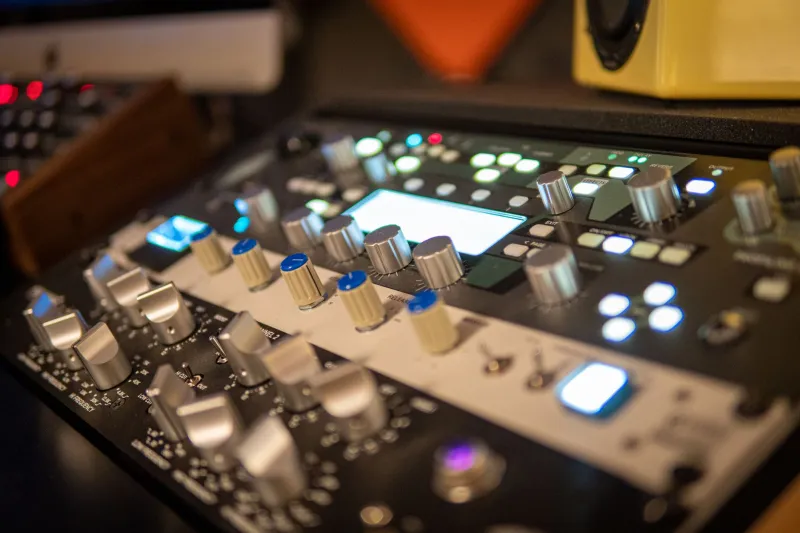
The basic setup is straightforward: a contact microphone (or even a high-sensitivity condenser placed close to a calm, sleeping cat) can pick up both heartbeat and purr vibrations. From there, producers are running those recordings through everything from pitch-shifting plugins to granular synthesizers, stretching a single 30-second purr sample into a textural bed that sits just under the threshold of conscious hearing.
Brooklyn producer Lena Foss, who makes what she calls "slow-build ambient pop" under her own name, describes the technique as a kind of emotional scaffolding. "I'm not putting a cat heartbeat in your face," she explains. "It's more like I'm giving the track a nervous system. Listeners don't know it's there, but they feel it. I've had people tell me my music makes them feel safe, and I think part of that is literally just — there's a living rhythm underneath everything."
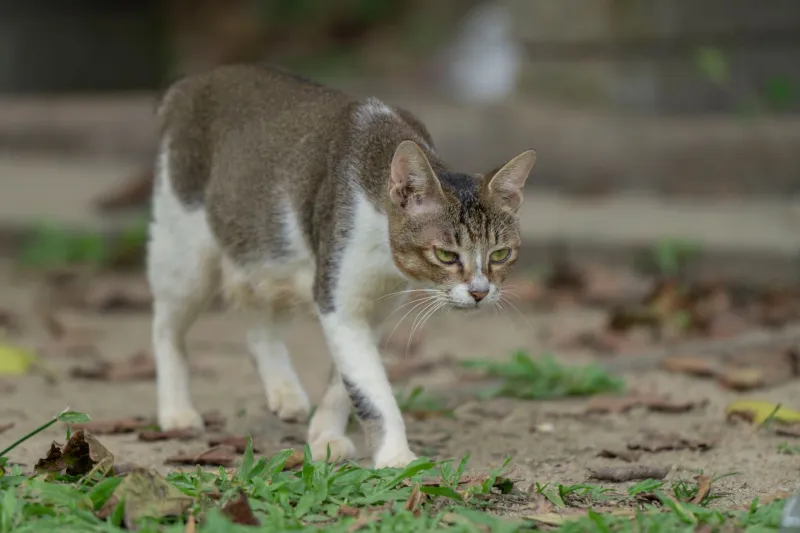
Foss records her two cats, Moth and Cinder, regularly. She keeps a dedicated folder of their resting states, active purring, and what she describes as "that half-asleep chirp sound" that she uses for texture rather than rhythm. "Moth has this really low, almost subsonic purr," she says. "I've pitched it down and used it as a kick drum substitute. People think it's some vintage drum machine. It's a six-year-old tabby."
Why the Human Brain Responds
The psychological dimension here is worth unpacking. Humans are deeply conditioned to respond to heartbeat rhythms — it starts in the womb, where fetal development happens against the constant backdrop of maternal cardiac pulse. Research in music cognition has long pointed to tempo relationships with resting heart rate as a factor in how we categorize music as "calming" or "energizing."
What's interesting about feline heart rates specifically is that they sit in a zone that feels subtly elevated compared to human resting norms — not anxious, but alert. Producers who work with these rhythms describe a quality in the resulting tracks that listeners often call "alive" or "present." It's a tempo that doesn't let you fully zone out, but doesn't push you into stress either.
There's also the purring frequency angle. Studies out of institutions like the University of California have explored how low-frequency vibrations in the 20–50 Hz range interact with the human nervous system. That range overlaps heavily with what a purring cat produces. Layered beneath music, even at low amplitude, it may be contributing to the kind of physical relaxation response that listeners are reporting without being able to name.
Keeping It Grounded (and Honest)
Not everyone is convinced this is more than producer mythology, and that's a fair pushback. Placebo effects in music listening are real and well-documented. If a listener knows there's a cat heartbeat in a track, they might project warmth onto it regardless of what the frequency data actually shows.
Delray acknowledges this. "I'm not making any scientific claims," he's careful to say. "What I know is that when I use these samples, I make better decisions in the rest of the arrangement. It changes how I mix. Whether that's the cat's frequencies doing something or just me being more connected to the session — honestly, I don't care. The music is better."
Foss takes a similar view. "I think about it less as a technique and more as a philosophy. I'm inviting something living into the process. Cats don't perform. They don't care about your deadlines. There's something really grounding about building a track around a rhythm that has nothing to do with the music industry."
The Broader Shift in Indie Production
This trend fits into something larger happening in independent music right now — a move away from purely constructed, grid-locked production toward textures and rhythms that feel organic, imperfect, and emotionally legible. Listeners are increasingly good at detecting when music has been over-engineered, and they're gravitating toward work that feels like it came from somewhere real.
Cat heartbeats, strange as it sounds, might be one answer to that hunger. They're biological. They're consistent without being mechanical. And they carry, at least symbolically, the weight of a living creature that was present in the room when the music was made.
There's something to that. Music has always been about presence — the sense that another person was in a space, feeling something, and left a trace of it in sound. If a cat was there too, curled up and purring at 140 BPM while someone built something beautiful around it, maybe that just makes the trace a little warmer.
Moth and Cinder, for their part, have no comment.