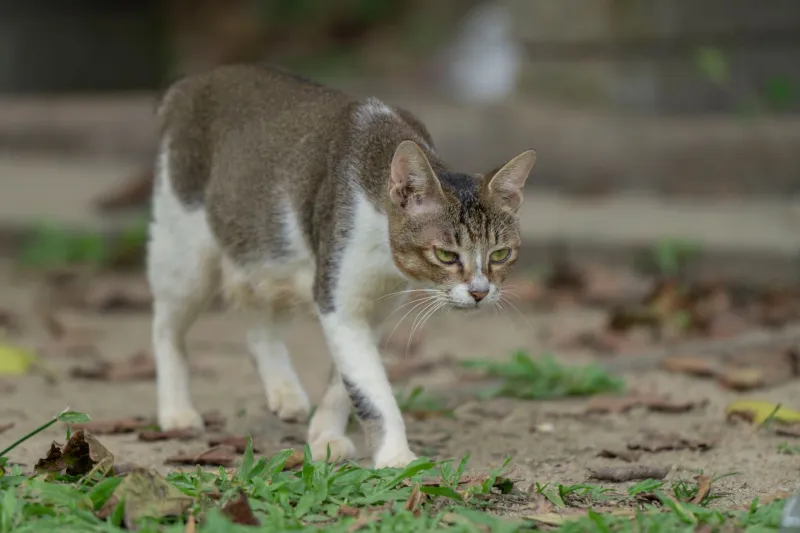
Four Paws, Two Ears, One Honest Opinion: Why Your Cat Might Be the Best A&R Rep in the Room
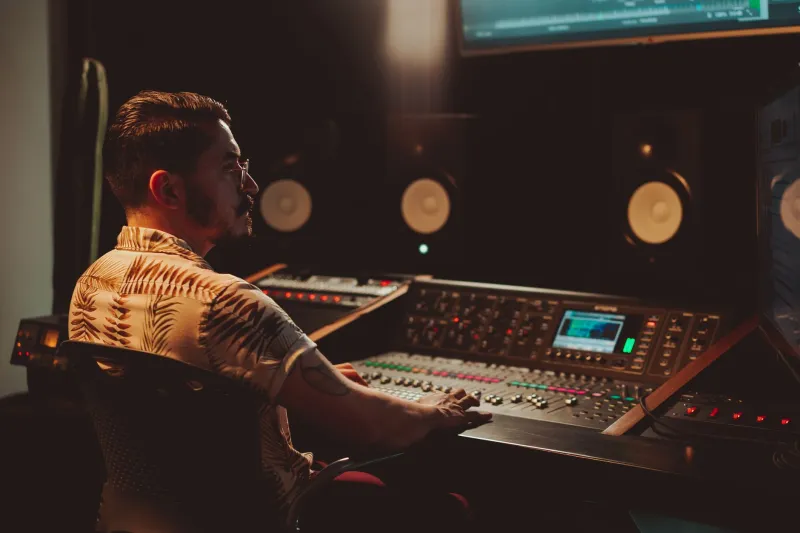
Let's be real for a second. You've spent three hours tweaking a hi-hat pattern. You've swapped out the bass sample four times. You've played the drop for two friends and gotten two completely different opinions. Meanwhile, your cat has been sitting on the edge of the desk this whole time, and nobody asked her anything.
Maybe they should have.
Across bedroom studios from Brooklyn to Burbank, a growing number of indie producers are starting to treat their cats' in-the-moment reactions — the ear swivel, the slow blink, the sudden bolt from the room — as something more than coincidence. Some of them swear it's changed how they finish tracks. And when you dig into the science a little, it's not as far-fetched as it sounds.
What Cats Are Actually Hearing (That You're Not)
Here's the thing about feline hearing that most people don't fully appreciate: cats can detect frequencies ranging from roughly 48 Hz all the way up to 85 kHz. For context, humans max out somewhere around 20 kHz on a good day. That means your cat is processing layers of your mix that exist entirely outside your own perception.
High-frequency artifacts, digital distortion in the upper register, harsh resonances sitting above 16k — your cat catches all of it. Dr. Charles Snowdon, a researcher at the University of Wisconsin-Madison who has studied species-specific music, has noted that animals respond most noticeably to music written within their own vocal and hearing range. Cats are particularly sensitive to tempo and pitch relationships that mirror the sounds they naturally communicate with.
So when your cat suddenly perks up and stares at your monitors, she may genuinely be reacting to something in the frequency content of what you're playing. And when she leaves the room? That might be data too.
The Producers Who Started Paying Attention
Marcus T., lo-fi producer out of Atlanta: Marcus has been making beats out of his apartment for six years. His cat, a gray tabby named Coltrane, started showing up in his sessions early on — mostly just sleeping on a spare keyboard. But Marcus noticed something over time. Coltrane would stay put and occasionally lift his head during certain tracks. On others, he'd jump down within sixty seconds.
"I started keeping a rough log," Marcus says. "Not scientific or anything, just notes on my phone. The tracks where Coltrane stuck around longer were almost always the ones that performed better when I posted them. I can't explain the mechanism. I just know the pattern held up."
One track in particular — a slower, warmer beat with a lot of mid-range texture — had Coltrane sitting directly in front of the left monitor for nearly the entire playback. Marcus released it as part of a short EP and it became his most-streamed record by a significant margin.
Priya S., singer-songwriter based in Chicago: Priya writes and produces her own material, blending indie folk with electronic production. Her cat, a tortoiseshell named Miso, has a very specific tell. When Priya plays something that isn't working — lyrically flat, melodically repetitive — Miso starts grooming herself mid-listen.
"It sounds ridiculous, but grooming is what cats do when they're bored or slightly stressed," Priya explains. "The second I see Miso licking her paw, I know something in the arrangement isn't landing. I've gone back and reworked sections specifically because of that." She laughs, then adds: "My manager has no idea Miso has co-writing credits in my head."
Derek O., experimental producer from Portland: Derek makes dense, layered music — lots of textures, unconventional time signatures, heavy reverb tails. His two cats, named Tape and Hiss, respond very differently to his work depending on the day.
"Tape is tolerant of almost anything. Hiss cannot handle certain high-frequency drones," Derek says. "Early on I thought it was just random cat weirdness. Then I started noticing it was always the same frequency range. I ran a spectrum analysis and sure enough, there was a harsh resonance sitting around 14k. Completely inaudible to me but clearly irritating to Hiss." He pulled that frequency back with a narrow EQ cut. The track opened up considerably.
"Hiss basically saved that record from sounding brittle," he says.
Camille R., bedroom pop artist from Nashville: Camille's cat Biscuit has one very dramatic move: the slow walk-out. Not a sprint, not a startle — just a calm, deliberate exit from the room. Camille has come to dread it.
"If Biscuit walks out during a playback, I know the song is mid. Every time," she says. "I've tried to argue with it. I've told myself Biscuit just needed water. But I've never released a song that Biscuit walked out on and had it do well. It's a perfect record at this point."
One recent track — a song she was on the fence about — had Biscuit stay for the entire four minutes, then sit down directly in front of the speaker at the outro. Camille took it as a green light and released it. It became her most-shared single on Spotify in the past year.
How to Actually Use This in Your Own Sessions
Okay, so you're not going to build an A&R pipeline around your cat's attention span. But there's something genuinely useful in paying attention to these reactions, especially during the mixing and arrangement stages.
A few practical approaches producers have tried:
- Track the exits. Note when your cat leaves the room during playback. If it's consistent across multiple listens, something in the high-frequency range or overall energy level may be off.
- Watch for the ear swivel. A single ear rotating toward the speakers is a good sign. It suggests a tonal or rhythmic element is registering as interesting rather than grating.
- Use the boredom check. If your cat starts grooming or falling asleep within the first thirty seconds, consider whether your intro is doing enough work to hold attention.
- Don't ignore the startle. A sudden flinch or wide-eyed reaction to a specific moment in a track can point to a transient that's too harsh or a dynamic shift that's too abrupt — things that can also fatigue human listeners even if they don't consciously register it.
None of this replaces a real set of ears from someone whose opinion you trust. But in a bedroom studio at 1 AM when you're the only one home, your cat is the only audience you've got.
The Honest Truth About Feline Feedback
There's no peer-reviewed study confirming that cats can predict a track's streaming performance. To be clear. But what these producers are actually describing — whether they know it or not — is a form of environmental feedback that forces them to step outside their own heads.
When you're deep in a session, you lose objectivity fast. Your ears fatigue. You stop hearing problems. Watching your cat's reaction gives you a reason to listen fresh, from a different angle, as if through a completely different sensory system. That mental reset alone can surface things you'd otherwise miss.
Coltrane, Miso, Tape, Hiss, and Biscuit aren't music critics. But they might be the most honest listeners in the room. And in indie music, honest is rare enough that you probably shouldn't ignore it when it shows up — even if it's sitting on your keyboard and occasionally knocking your headphones off the desk.
Your next great track might just need a second opinion from someone with four legs and no agenda.