When Cats Scroll, Artists Listen: The Surprising Data Strategy Indie Musicians Are Stealing From Feline Behavior
It sounds like the kind of idea someone pitches at 2 AM after too much cold brew. But across indie music communities in cities like Austin, Brooklyn, and Portland, a growing number of independent artists are doing something that would've seemed absurd five years ago: they're studying how cats engage with video content — and using those patterns to decide which songs to release, when to drop them, and how to structure the first ten seconds of every track.
Call it unconventional. Call it genius. Either way, the data is starting to back it up.
The Attention Span Problem Nobody Wants to Admit
Here's the uncomfortable truth most indie artists already know but rarely say out loud: humans and cats have a lot more in common when it comes to digital attention than anyone wants to admit. Both species are easily distracted. Both respond to sudden movement or unexpected sound. And both will completely abandon something the moment it stops delivering a hit of novelty.
That overlap is exactly what Chicago-based producer and multi-instrumentalist Dara Solís started noticing about three years ago. She'd been posting short clips of her lo-fi bedroom pop tracks alongside footage of her two cats, Miso and Tamale, and something strange kept happening.
"I started paying attention to the exact moment Miso would look away from the screen," she says. "Not just in my videos — in everything. And I realized his attention drop-off points were almost always the same spots where my song engagement would crater too. Like, he was doing what every algorithm was telling me listeners were doing, just in real time, right in front of me."
Solís began timestamping those moments. She mapped them against her Spotify for Artists data and her TikTok analytics. The correlation wasn't perfect, but it was consistent enough to make her rethink her entire approach to song structure.
What Feline Engagement Actually Measures
To understand why cat behavior works as a proxy for audience psychology, it helps to think about what cats are actually responding to. Cats are hardwired to track contrast, motion, and unpredictability. They lock in when something surprises them and disengage the moment a pattern becomes too predictable. Sound familiar?
That's essentially the same mechanism driving human listener retention on streaming platforms. The hook has to hit fast. The dynamic range has to stay interesting. The moment a track becomes wallpaper — sonically predictable, emotionally flat — listeners bounce, often without even realizing they've done it.
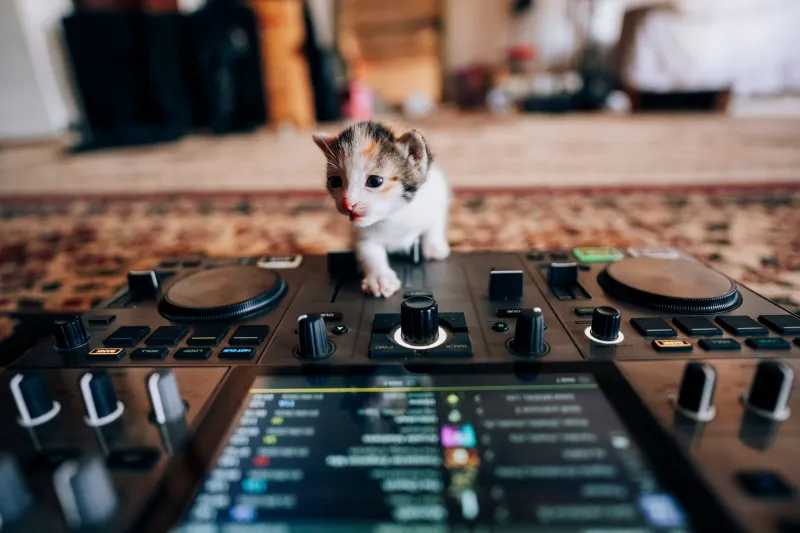
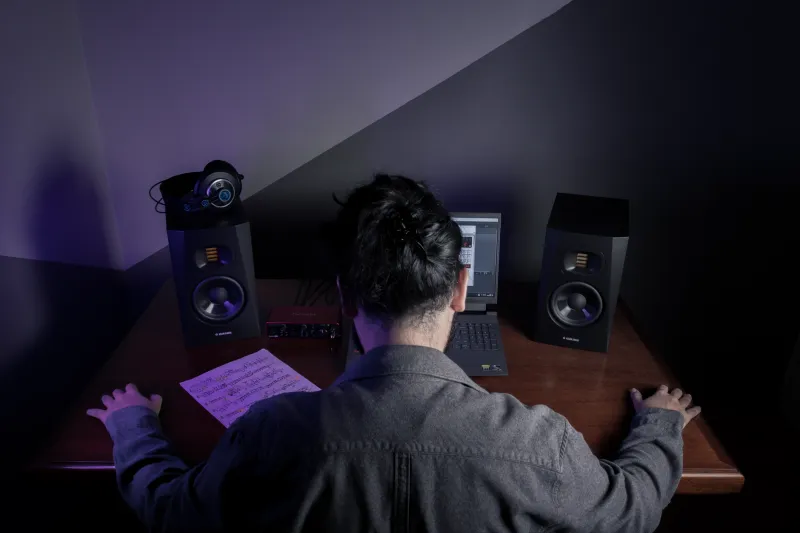
LA-based producer Marcus Teel, who records under the name Velvet Static, has been using what he half-jokingly calls a "meow meter" methodology for about eighteen months. His process involves playing rough mixes through his home studio speakers while his cat, an opinionated orange tabby named Copernicus, roams freely in the room.
"I'm not saying my cat has better ears than an A&R rep," Teel says with a laugh. "But Copernicus has this thing where he'll walk toward the speaker when something catches him and straight-up leave the room when a section drags. I started filming these sessions just for fun, and then I noticed I kept cutting the exact parts he walked away from. It became a ritual."
Teel's last two singles — both of which cracked 200,000 streams within their first month — were both edited in part based on those informal feline focus groups.
Reading the Data Beyond the Cute Factor
The real analytical work, though, goes deeper than watching cats react in real time. Several indie artists have started pulling engagement data from cat-focused content specifically because it represents one of the most behaviorally honest audiences on the internet.
Cat videos and cat-adjacent content attract viewers who are not in a curated, intentional listening mode. They're scrolling passively. They're half-watching. They're exactly the kind of audience an indie artist needs to capture during a cold discovery moment — someone who wasn't looking for new music but stumbles across it anyway.
Seattle-based singer-songwriter Priya Nambiar has built her entire release strategy around this insight. She tracks engagement metrics on cat content accounts that regularly feature music in the background, paying close attention to where average view duration drops, which audio moments trigger saves or shares, and what visual-audio combinations produce the highest comment engagement.
"I'm not trying to make cat music, though honestly that would also be a valid career," she says. "I'm trying to understand what makes a passive viewer stop scrolling. Cats are the most passive viewer there is. If a song can hold a cat's attention, or at least hold the attention of someone watching a cat, you've got something real."
Nambiar's approach involves building what she calls a "passive listener profile" — essentially a map of where attention lives and where it dies across a cross-section of non-music-focused content. She then reverse-engineers her arrangements to hit the engagement peaks and avoid the drop-off valleys.
Structuring Songs for the Scroll
So what does a song actually look like when it's been optimized through this lens? According to the artists using this approach, a few patterns emerge consistently.
First, the intro cannot afford to be patient. The days of a 30-second atmospheric build before the first lyric are over for anyone trying to reach new listeners organically. Solís now writes what she calls "immediate contrast" openings — a sonic moment in the first three seconds that's distinct enough to register even on a phone speaker at half volume.
Second, transitions are everything. Cat engagement data consistently shows attention spikes at moments of change — a new texture, an unexpected chord, a dynamic shift. Artists who space those moments strategically, roughly every 20 to 30 seconds, tend to see significantly better retention curves.
Third — and this one surprised even the producers who discovered it — silence works. Brief, intentional pauses create the same kind of alertness in a passive listener that a sudden stillness triggers in a cat. It breaks the pattern. It demands attention. And it does it without adding a single note.
Beyond the Algorithm Grind
What makes this whole approach interesting isn't just that it works. It's that it works for reasons that have nothing to do with gaming a specific platform's algorithm. Algorithms change. Cat psychology, and human psychology, doesn't.
The artists leaning into feline behavior analytics aren't chasing TikTok trends or trying to reverse-engineer Spotify's editorial playlists. They're going upstream, trying to understand the fundamental mechanics of attention itself. And they're finding that a creature with a four-second decision-making window and zero patience for filler is actually a pretty rigorous quality filter.
"Copernicus doesn't care about my follower count," Teel says. "He doesn't care if the song is on brand or if the cover art is cohesive. He either stays or he leaves. And honestly? That's the most useful feedback I've ever gotten."
For independent artists working without label budgets or marketing teams, that kind of honest, low-cost signal might be exactly what sustainable momentum looks like. Not a viral moment. Not an algorithm spike. Just a cat, a speaker, and a song that's actually worth staying in the room for.