Feline Frequencies: How Cat Vocalizations Are Giving Indie Artists a Roadmap to Weirder, Better Song Structures
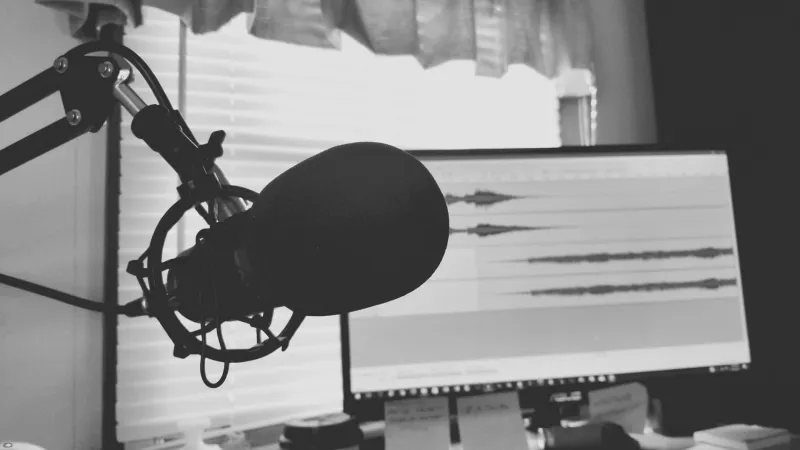
Somewhere between a trill and a yowl, indie producer Marcus Delray found his breakthrough. He'd spent three years chasing a specific emotional arc in his music — that unsettled, searching feeling right before a resolution — and couldn't crack it with conventional song structures. Then his cat, a chatty tortoiseshell named Biscuit, started doing her pre-feeding call sequence near his open DAW session. He hit record. What happened next changed how he writes music entirely.
"She went from this low chirp into a rising trill and then dropped into a flat, almost monotone meow," Delray says. "I mapped that pitch movement onto a chord progression and it was the most interesting thing I'd written in years. It didn't follow any rule I'd been taught. It just worked."
Delray isn't alone. Across the US, a loose community of experimental and indie artists is starting to look at cat vocalizations not just as ambient texture or cute sample fodder, but as a genuine structural language — one that sidesteps Western music theory's familiar grooves and opens up genuinely unexpected territory.
Why Cat Communication Is Acoustically Fascinating
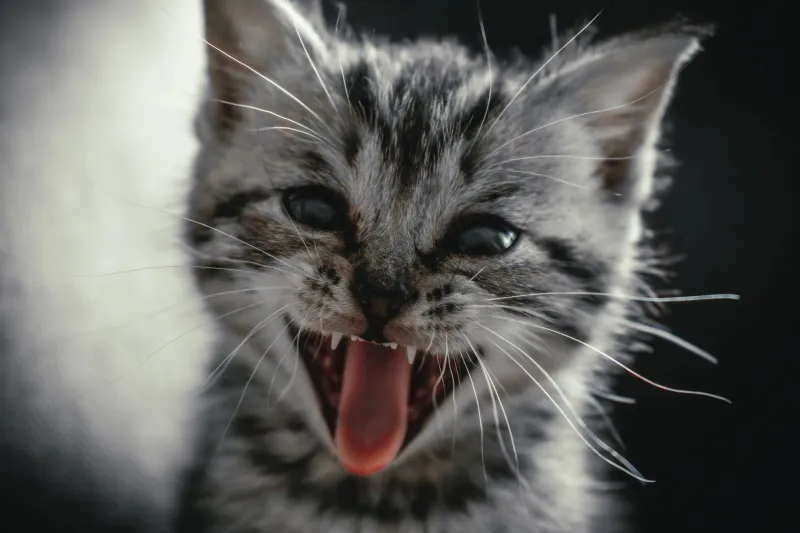
Here's the thing most people don't realize: cats didn't evolve their vocalizations to communicate with each other. Adult cats in the wild are largely silent around other cats. The meow, the chirp, the trill — these sounds developed almost entirely as a way to talk to humans. That means cat vocalizations are, in a very real sense, a cross-species musical language built on improvisation and instinct.
Feline communication researchers have catalogued over a dozen distinct vocal categories, each with its own pitch range, duration pattern, and emotional function. A mother cat's trill to her kittens sits in a completely different frequency register than the elongated yowl of a territorial male. The chirp — that rapid staccato burst cats make when they spot a bird through a window — has a rhythmic density closer to a drum fill than a melodic phrase.
For producers trained to think in terms of motifs, tension, and release, this variety is basically a free masterclass in unconventional phrasing.
"The thing that gets me is the pitch bending," says Brooklyn-based composer and multi-instrumentalist Yara Osei. "A cat doesn't hit a note and hold it clean. There's this natural glide, this wavering quality. When I started incorporating that into my synth leads — programming in that same kind of unstable pitch movement — my tracks started sounding like nothing else in my genre."
Mapping the Meow: A Practical Framework
So how are artists actually doing this? The approaches vary wildly, which is part of what makes this trend so interesting.
Some producers, like Delray, work by ear — recording their cats and then transcribing the pitch movement into MIDI, using it as a melodic skeleton they can flesh out. Others are getting more technical, running vocal recordings through pitch analysis software to extract exact frequency data and then building scales or modes from the intervals they find.
Osei has developed her own system. She categorizes her cat's calls by emotional context — hunting mode, greeting, distress, contentment — and uses each category as a tonal palette for a specific section of a song. Hunting chirps become her verse energy. Greeting trills become her hooks. The long, plaintive yowl her cat does at 2 AM gets reserved for bridge moments when she wants to destabilize the listener before the final chorus lands.
"It sounds abstract but it's actually really intuitive once you start thinking about it," she explains. "Cats are communicating something specific with every sound they make. If you can decode the emotional logic, you've basically got a ready-made guide to when to create tension and when to release it."
Breaking Out of the Verse-Chorus Prison
One of the most consistent things artists in this space talk about is how feline vocal patterns naturally resist the verse-chorus-verse-chorus structure that dominates mainstream pop and a huge chunk of indie music. Cat communication doesn't work in loops. It responds. It escalates. It wanders and then suddenly resolves.
That non-linear quality is exactly what experimental producers are hungry for.
Los Angeles-based artist and producer Theo Kaminski has been building entire song architectures around what he calls "call sequences" — the multi-step vocal exchanges his two cats have when they're playing or competing for space. "They'll go back and forth with these short, clipped sounds, and then one of them will do this long sustained note, and then there's this silence, and then it starts again in a different register," he says. "That's basically ABACB song structure. I didn't invent it. My cats did."
Kaminski's recent EP, released on Bandcamp to a quietly devoted following, runs entirely on this logic. There are no choruses in the traditional sense. Instead, recurring sonic motifs return in altered forms — lower, slower, pitched differently — the way a cat might repeat a call with subtle variations depending on whether it's being heard or ignored.
The Science Backing Up the Instinct
What's compelling here isn't just that it sounds cool. There's actual acoustic science supporting why feline vocal patterns feel emotionally resonant to human ears.
Research into cat-human communication has found that cats modulate their meows specifically based on human responses — essentially learning to fine-tune their calls for maximum emotional impact on their particular human. That's a feedback-driven communication system, and it produces vocalizations with a natural expressiveness that's genuinely affecting.
Studies have also shown that human listeners tend to respond emotionally to cat vocalizations in ways that parallel how they respond to infant cries — which tells you something about why these sounds hit a primal register that pure music theory often can't access.
For indie artists trying to make music that connects rather than just impresses, that's a pretty significant insight.
Where This Goes Next
It'd be easy to write this off as a niche experiment, but there are signs it's spreading. Online production forums have seen growing threads about feline-inspired arrangement techniques. A handful of experimental musicians on Patreon have started sharing tutorials specifically about using animal vocalizations as structural templates, with cat sounds consistently showing up as the most popular example.
Osei thinks the appeal is ultimately pretty simple. "We're all a little sick of music that sounds like it was built from a template," she says. "Cats don't know what a template is. They just communicate what they need to communicate in the most direct way possible. There's something really freeing about using that as your starting point."
Delray agrees. Biscuit, for her part, remains unimpressed by the music she's inspired — though she does tend to sit closer to the monitors when he plays back certain tracks. He takes that as a sign he's on the right track.
"She doesn't care about my career," he laughs. "But she cares whether the sound feels right. Honestly, that's a better filter than most A&R feedback I've gotten."
If you're an indie artist who's been circling the same structural habits for years, it might be worth paying closer attention to whatever's meowing at your feet. The blueprint might already be in the room.