From Jingle to Underground Gem: How Indie Artists Are Flipping Corporate Cat Ads Into Lo-Fi Gold
There's a four-note melody burned into the brain of basically every American who grew up watching Saturday morning cartoons. Meow. Meow. Meow. Meow. You already heard it just now, didn't you? That's the power of a truly great jingle — and a handful of indie producers have decided that kind of cultural muscle is way too interesting to leave sitting in a pet food commercial.
Over the last few years, a scrappy underground movement has been quietly building around the idea of reclaiming corporate cat culture. Independent musicians are sampling, chopping, pitching down, and completely reimagining the commercial music that soundtracked American pet ownership from the 1980s through the early 2000s. The results range from genuinely hypnotic lo-fi instrumentals to full-on avant-garde sound collages that would feel right at home in a Brooklyn art gallery — or at least a very cool cat café.
Why Cat Jingles, of All Things?
The honest answer is that these things are sticky in a way that most music just isn't. Jingles were engineered to lodge themselves in your memory and stay there for decades. They're melodically simple, rhythmically repetitive, and loaded with emotional association. For a producer looking for raw material, that's basically a cheat code.
But there's something deeper going on here too. A lot of the indie artists gravitating toward this source material grew up in households where these commercials ran on loop. Purina, Fancy Feast, 9Lives — these brands weren't just selling cat food, they were selling a specific vision of domestic American life. Warm kitchens. Contented pets. A kind of cozy consumer happiness that, in retrospect, feels both genuinely nostalgic and just a little bit hollow.
That tension — between real warmth and manufactured sentiment — is exactly what makes this stuff so creatively fertile. When you slow down a Fancy Feast jingle to 60 BPM and layer it under a dusty drum break, something shifts. The saccharine becomes melancholy. The corporate becomes intimate. The kitsch becomes art.
The Copyright Tightrope
Now, let's talk about the elephant — or the cat — in the room. Sampling commercial music is legally complicated, and most of these producers know it. The big pet food brands own their jingles outright, and clearing a sample from a 1987 Meow Mix ad isn't exactly a straightforward process.
So how are indie artists navigating this? A few different ways, honestly.
Some lean hard into transformation — chopping samples so thoroughly that the original is barely recognizable, pitching vocals down three octaves, reversing melodic phrases, or burying a two-second clip so deep in a texture that it functions more as atmosphere than reference. Courts have generally been friendlier to this kind of radical transformation, though nothing is ever truly guaranteed.
Others sidestep the issue entirely by recreating rather than sampling. They'll study the harmonic structure and rhythmic feel of a classic jingle, then build something new that evokes the original without directly lifting it. It's a more time-intensive approach, but it gives the artist full ownership of the final product — which matters a lot when you're trying to actually put music on streaming platforms.
And then there's a third camp that just releases stuff on Bandcamp and SoundCloud, prices it at whatever-you-want, and accepts the legal gray area as part of the aesthetic. There's a whole tradition of underground music operating in that space, from mixtape culture to vaporwave, and the cat jingle remixers fit pretty comfortably into that lineage.
Kitsch as Critique
What makes this movement genuinely interesting — beyond the novelty — is the layer of cultural commentary baked into it. These artists aren't just making music about cat food commercials. They're using those commercials as a lens to examine how corporate interests have always shaped popular culture, including music.
Think about it: jingles are one of the purest examples of music created entirely in service of commerce. There's no artistic ambiguity about their purpose. They exist to sell product, full stop. By taking that music and stripping it of its commercial function — by making it weird, slow, sad, or beautiful — indie producers are essentially asking: what happens when you remove the selling from the song? What's left?
Sometimes what's left is surprisingly moving. There's something genuinely poignant about a childhood memory reconstructed in lo-fi, even if that memory is technically just an advertisement for kibble.
This kind of ironic reclamation has a long history in American underground art — think Andy Warhol's soup cans, or the way hip-hop producers flipped TV theme songs in the 90s. The cat jingle remixers are operating in that same tradition, just with a very specific and very online aesthetic sensibility.
Building a Fandom on Nostalgia and Weirdness
Here's the practical side of all this: it works as a fan-building strategy, and indie artists are starting to figure that out.
Content built around recognizable cat ad samples travels fast on social media. When someone hears a lo-fi beat that's clearly built around a melody they haven't consciously thought about in twenty years, the reaction is almost involuntary — they stop scrolling, they comment, they share. The nostalgia hook does a lot of the heavy lifting that most indie artists have to work incredibly hard to manufacture.
And the cat angle doesn't hurt. Cat content is still one of the most reliably shareable categories on the internet, and music that sits at the intersection of cat culture, nostalgia, and indie production weirdness occupies a genuinely unique niche. It's not competing with mainstream pop. It's not even really competing with most indie music. It's its own thing.
Artists who've leaned into this aesthetic tend to attract fans who are deeply invested — people who appreciate the layers of reference, who get the joke and also genuinely love the music, who feel like they've found something that was made specifically for them. That's the kind of fandom that sticks around.
What This Sounds Like in Practice
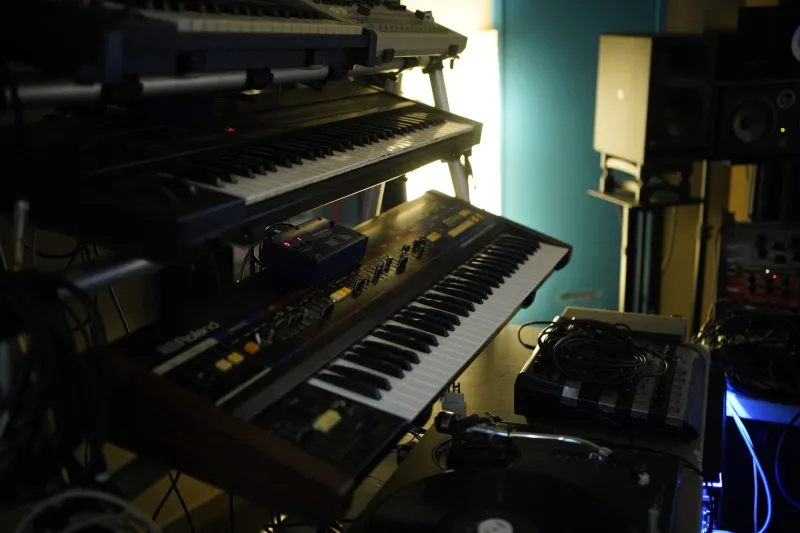
If you haven't heard any of this yet, here's a rough sketch of the sonic landscape. Imagine a drum machine pattern running at a sleepy, head-nodding tempo. Underneath it, a bassline that feels vaguely familiar — maybe a little too melodically simple to be original. And then floating somewhere in the mix, pitched down and reverb-drenched, a vocal fragment that your brain keeps trying to place before it finally clicks: that's a cat food commercial.
Some producers go further into abstraction, using jingle fragments as pure texture — stretched into drones, granularly processed into ambient clouds, or fed through distortion until they're almost unrecognizable. Others keep the original melody relatively intact and let the contrast between the source material and the production style do the work.
The best stuff in this space manages to be funny and sincere at the same time, which is a genuinely hard balance to strike. It's music that knows exactly how strange it is and leans into that strangeness without becoming a pure novelty act.
The Bigger Picture
There's something fitting about indie artists finding creative fuel in the corporate music that was designed to be forgettable. Jingles were never supposed to be art — they were supposed to move product and then fade into the background of American life. The fact that they didn't, that they lodged themselves so deeply in our collective memory that producers are still pulling them apart forty years later, says something interesting about how music actually works.
And the fact that independent artists are the ones doing this reclamation — not major labels, not ad agencies, not the brands themselves — feels right. This is exactly the kind of weird, boundary-pushing, commercially useless creative work that the indie ecosystem exists to support.
So the next time you're scrolling through Bandcamp and you stumble on a beat that makes your brain do a double-take, that makes you think wait, is that... — follow that instinct. There's a whole underground built on exactly that feeling, and it's stranger and more interesting than you'd expect.