Frequencies for Felines: Meet the Indie Producers Crafting Music for Cats and the People Who Love Them

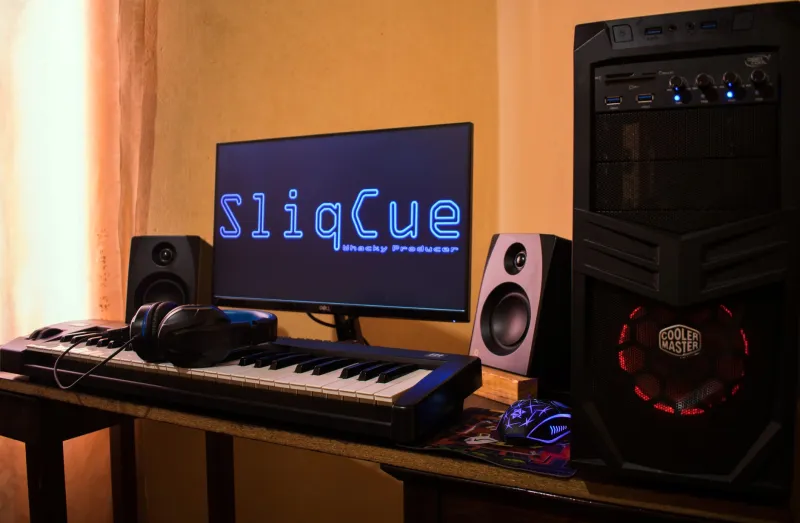
Photo: Mikołaj Starzyński, CC BY 4.0, via Wikimedia Commons
Picture this: it's 2 a.m., your cat is pacing and yowling, and you've tried everything. Then you put on a playlist, and within minutes, she curls up and goes still. That's not magic — that's audio engineering, and a growing community of indie producers is treating it with the same seriousness they'd bring to any other production challenge.
Welcome to the world of cat-directed ambient music, a niche genre that sits at a genuinely strange and fascinating crossroads between pet wellness, lo-fi aesthetics, and independent music creation. It sounds like a novelty. It's increasingly not.
The Science Behind the Sound
The foundation of this genre rests on real research. Studies published in journals like Applied Animal Behaviour Science have explored how cats respond to music composed using species-appropriate tempos and frequency ranges — specifically, sounds that mirror the vocalizations and purring rhythms cats naturally produce. Music built around these principles tends to elicit measurable calming responses in cats: slower breathing, reduced movement, longer rest periods.
For indie producers, this research has become a kind of production brief. Rather than composing purely for human emotional experience, they're designing tracks that operate on two levels simultaneously — soothing to a cat's nervous system while remaining genuinely listenable for the human in the room.
"I started reading the studies almost by accident," says Portland-based producer James Weller, who releases music under the name Slow Purr. "I was already making ambient lo-fi stuff, and I had two cats who seemed really responsive to certain tracks. I started digging into why, and it kind of rewired how I think about frequency choices."
Weller now builds his tracks around a core frequency range of roughly 25 to 50 Hz — the range associated with feline purring — layering it beneath more traditional ambient textures. The result is music that feels unusually warm and grounding to human ears without sounding clinical or weird. "Most people who listen to my stuff have no idea there's a cat-specific layer in there," he says. "They just know it makes them feel calm."
Lo-Fi Meets Litter Box: The Aesthetic Side
Beyond the science, there's a strong aesthetic current running through this genre that connects it to the broader lo-fi and ambient movements already popular on streaming platforms. Think soft tape hiss, gently detuned pianos, field recordings of rain or distant traffic — the sonic vocabulary of lo-fi study music, but with an added layer of intentional design.
Several producers in this space have explicitly positioned their work within the lo-fi aesthetic, which has the advantage of already having a massive, established streaming audience. Playlists like "lo-fi beats to study/relax to" have hundreds of millions of streams on Spotify and YouTube. Slipping cat-optimized ambient tracks into that ecosystem isn't a hard sell — especially when the music genuinely holds up for human listeners.
Chicago producer Nadia Ferris, who makes music as Catacomb Sounds, describes her process as "lo-fi with a hidden layer." Her tracks are built to work as background music for humans first, with the feline-calming elements woven in rather than front and center. "I don't want it to feel like a product," she says. "I want it to feel like a record. It just happens to also work really well if you have a stressed-out cat."
Monetizing a Dual Audience
Here's where things get practically interesting: because this music serves two audiences, it opens up monetization avenues that most indie producers don't have access to.
On the streaming side, cat-wellness playlists on Spotify and YouTube perform exceptionally well in terms of listen duration. Ambient and sleep-focused content tends to rack up long session times, which translates to more streaming revenue per listener than a three-minute pop song. Several producers in this space report that their cat-focused releases generate disproportionately high streaming income relative to their play counts.
Beyond streaming, there's a growing market for licensed content in the pet wellness space. Veterinary offices, pet boarding facilities, and even pet-focused apps are actively seeking music designed for animal environments. For an indie producer who's already making this content, licensing it to a pet wellness app or a chain of cat cafés represents meaningful additional income without additional creative work.
Weller recently licensed a full album to a national pet boarding company for use in their cat housing areas. "It wasn't a huge check," he admits, "but it was passive income on music I'd already made. That's kind of the dream for any indie producer."
Ferris has taken a different approach, building a Patreon community around her monthly releases where subscribers — mostly cat owners, she notes — pay for early access and exclusive tracks. "My audience is really specific," she says. "They're cat people who care about their cats' wellbeing and also genuinely like ambient music. That's a small group, but they're incredibly loyal."
The Broader Cultural Moment
It would be easy to dismiss cat-directed ambient music as a quirky corner of the internet. But zoom out and it fits neatly into several larger cultural trends: the mainstreaming of pet wellness as a serious consumer category, the continued dominance of lo-fi and ambient music on streaming platforms, and the broader indie music community's willingness to experiment with unconventional audiences and formats.
The US pet industry topped $136 billion in spending in 2022, and a growing chunk of that is going toward wellness products — supplements, enrichment toys, anxiety wraps, and yes, increasingly, music. Indie producers who position themselves at that intersection aren't chasing a fad. They're building businesses in a market that's actively expanding.
For the artists themselves, the motivation is often simpler than the market analysis suggests. Most of them just genuinely love their cats and got curious about what their cats were hearing. The career opportunity followed the curiosity.
"I make music for my cats first," Weller says. "If other people's cats like it too, that's the whole thing. That's enough."