What Your Cat Is Actually Hearing: How Feline Science Is Rewiring the Way Indie Artists Write Songs
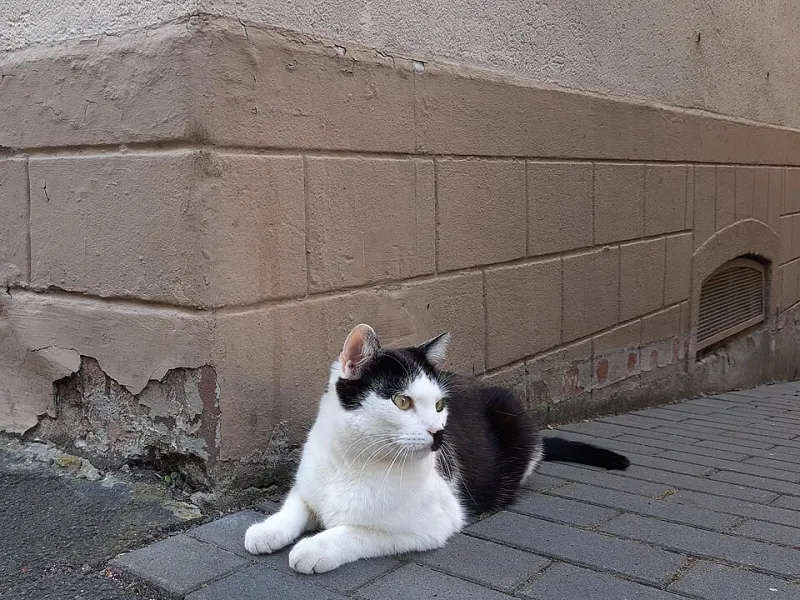
Photo: Gerda Arendt, CC BY-SA 4.0, via Wikimedia Commons
Most songwriters pull inspiration from heartbreak, road trips, or a really good cup of coffee. But a small and genuinely fascinating corner of the indie music world is pulling from somewhere a lot more unusual — peer-reviewed animal behavior journals.
Call it niche. Call it weird. Call it whatever you want. The artists doing it are making some of the most texturally interesting music coming out of independent scenes right now, and they've got a surprisingly solid scientific foundation under their feet.
The Research Nobody Expected Musicians to Read
In 2015, researchers at the University of Wisconsin published a study demonstrating that cats respond more positively to music composed specifically for their auditory range and communication style — think sliding frequencies, tempos that mirror purring, and tones that echo the chirping and trilling sounds cats actually use with each other. The paper got a decent amount of press at the time, mostly framed as a cute science story. But for a handful of indie producers, it landed differently.
Brooklyn-based multi-instrumentalist and producer Sela Vance remembers reading a summary of that research on a music forum around 2019. "I wasn't trying to make cat music," she says. "I was trying to understand resonance — why certain frequencies feel emotionally loaded. And then I'm reading about how cats process sound in this completely different register than humans, and I started wondering what it would mean to compose toward that gap."
Vance spent the next several months collaborating informally with a veterinary behaviorist at a New York animal clinic, running informal listening sessions with shelter cats while experimenting with synth patches built around the 50–80 Hz purr frequency range. The result was a four-track EP that she describes as "not for cats, but not not for cats either." It found an audience almost immediately on Bandcamp, pulling in listeners who were drawn to its unusual warmth and spatial depth.
Body Language as a Beat Map
Frequency ranges are only one piece of the puzzle. Portland-based producer and multi-instrumentalist Dario Fen has taken a different approach, using feline body language as a structural framework for rhythm and arrangement.
"Cats communicate so much through timing," Fen explains. "The slow blink. The tail flick before a pounce. The way they go completely still and then explode into movement. That's rhythm. That's dynamics. I started notating those behaviors like I would a drum pattern."
Fen worked with an animal behaviorist named Dr. Priya Holloway, who consults for several Pacific Northwest shelters, to map common behavioral sequences into compositional structures. The tail-flick-to-pounce sequence, for example, became a template for a specific kind of tension-and-release build that shows up throughout his 2023 album Still Hunter. The slow blink — that famous feline trust signal — translated into long, sustained tones that resolve unexpectedly late, creating a sense of earned intimacy.
"It sounds abstract when you describe it," Dr. Holloway admits, "but honestly, the behavioral science maps surprisingly well onto music theory concepts. Both are fundamentally about communication, expectation, and response."
Sensory Preference as Production Philosophy
Beyond rhythm and frequency, researchers have documented that cats are particularly sensitive to sudden high-frequency sounds, prefer predictable sonic environments, and can become stressed by dense, layered mixes that overwhelm their acute hearing. For indie producers interested in this space, those findings have become a kind of inverse production guide.
Chicago-based artist and sound designer Mika Torres has built an entire recording philosophy around what she calls "feline-informed minimalism." Her rule: if a mix feels cluttered to a cat, it probably feels cluttered to a human listener who hasn't consciously registered why.
"I started using cats as a mixing test," Torres says with a laugh. "Not literally — I'm not making my cats sit through playback sessions. But I'm asking the question: does this mix have space in it? Does it breathe? Cats don't tolerate sonic chaos well. And honestly, neither do most listeners, even if they don't know that's what's bothering them."
Her production work has earned consistent praise for its clarity and emotional openness, qualities she traces directly back to her unlikely research rabbit hole.
The Vocalization Goldmine
Perhaps the most direct application of feline behavioral science to songwriting is the study of cat vocalizations themselves. Cats are remarkably vocal animals — they produce chirps, trills, yowls, chatters, and at least a dozen distinct meow variations, most of which are used exclusively to communicate with humans rather than other cats. That specificity has fascinated linguistically-minded songwriters.
Singer-songwriter and composer Yael Birch, based in Austin, Texas, has been transcribing and sampling cat vocalizations for several years, working with a local animal behaviorist to identify the emotional context behind specific sounds. "There's a vocalization cats make when they see prey through a window — this rapid chatter — that has an almost percussive quality," Birch says. "I've been using it as a rhythmic element in a few tracks, pitched down and layered. It adds this urgency that's hard to manufacture artificially."
Birch is careful to note that she's not trying to replicate or mimic cat sounds in a novelty way. The goal is translation — finding the musical equivalent of the emotional content behind a vocalization and building that feeling into a composition organically.
Why This Actually Makes Sense
It's easy to read all of this as precious or overly conceptual. But there's a genuine artistic logic at work here that goes beyond gimmick. Music, at its core, is about communication — about creating a feeling in a listener that the creator intended. Animal behavioral science is, at its core, about understanding how living things communicate and perceive. The overlap isn't accidental.
What these indie artists are doing is expanding their source material. Instead of only looking inward — at their own emotions, their influences, their cultural references — they're looking outward at the full range of how sound functions as a communicative tool across species. And the results, more often than not, are compositions that feel genuinely different from anything else in their genre.
For a music scene that's always hunting for the next authentic creative breakthrough, that's not nothing. That's actually kind of everything.
If you've got a cat sleeping near your speaker right now, maybe they've known something about good sound design all along.