The Unlikely Collab: Why Indie Musicians Are Teaming Up With Cat Influencers to Actually Pay Their Bills
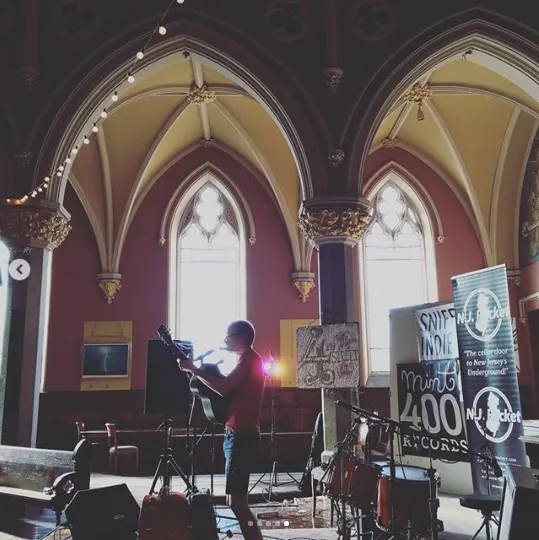
Photo: NorthPark1417, CC BY-SA 4.0, via Wikimedia Commons
Here's a pitch you wouldn't have heard five years ago: partner with a cat Instagram account to grow your music career. And yet, in 2024, that sentence describes a legitimate business strategy that is quietly funding some of the most creative independent artists working in the US right now.
This isn't about going viral on accident. It's not about your cat doing something funny in the background of a practice session. It's a deliberate, economics-driven approach to audience building — and it's working well enough that the artists doing it are starting to talk about it openly.
How the Ecosystem Actually Works
The cat content space online is enormous and deeply engaged. Accounts dedicated to specific cats, shelter adoption advocacy, cat care education, and general feline entertainment routinely pull hundreds of thousands to millions of followers across Instagram, TikTok, and YouTube. Their audiences skew toward millennial and Gen Z women in the US, are notoriously loyal, and spend money — on merch, on pet products, on things their favorite accounts recommend.
Independent musicians, meanwhile, are sitting on something cat content creators often lack: original, licensable audio. Background music for reels. Original songs that can soundtrack adoption videos. Ambient tracks that fit the cozy, low-stakes aesthetic that drives so much pet content engagement.
The match, when it works, is genuinely symbiotic.
"I had maybe 800 followers on Instagram when I reached out to a cat rescue account in Nashville that had about 90,000," says singer-songwriter and guitarist Jamie Osei, who is based in Tennessee. "I offered to write an original song for their next adoption campaign video. They used it, tagged me, and I picked up about 4,000 followers in two weeks. More importantly, I got three licensing inquiries from other pet accounts within the month."
Osei now earns a consistent portion of his income from licensing original music to pet content creators — a revenue stream that didn't exist in his career two years ago.
The Economics, Broken Down Honestly
Let's talk numbers, because the internet loves to make this stuff sound either more lucrative or more impossible than it actually is.
Direct licensing fees for background music used in social content can range from $50 to $500 per track depending on the account size and usage rights. That's not life-changing on its own. But stack five to ten recurring licensing relationships, add in revenue share from platforms where your music appears, factor in the audience growth that converts to Bandcamp sales, Spotify streams, and merchandise, and the picture starts to look more interesting.
Los Angeles-based producer and multi-instrumentalist Cass Moreno estimates that her pet content partnerships now account for roughly 30 percent of her total music income. "It's not glamorous to say that," she admits. "But it's real money, and it comes from an audience that genuinely connects with what I'm making. That's more than I can say for a lot of the traditional industry channels I spent years chasing."
Moreno has built relationships with three mid-sized cat influencer accounts — ranging from 40,000 to 200,000 followers — and one larger animal welfare nonprofit with a significant social presence. Each relationship is slightly different: one is a flat licensing deal, one involves co-created content, and one is a revenue-share arrangement tied to a playlist the nonprofit promotes.
What Cat Content Creators Actually Want
Understanding what makes a pet content creator say yes to a music collaboration is the difference between a cold pitch that gets ignored and a partnership that pays dividends.
Cat influencers are not primarily looking for exposure opportunities to hand out to musicians. They're running content businesses with specific aesthetic needs, posting schedules, and audience expectations. The artists who succeed in this space are the ones who approach it as a service relationship first.
"I ask them what they need before I pitch anything," says Seattle-based ambient producer Theo Nakamura, who has built a roster of pet content partnerships over the past three years. "Do they need background music for reels? A theme song for their account? Something for an adoption event? I come in with solutions, not just a link to my SoundCloud."
Nakamura has developed a short intake form he sends to potential partners asking about their content aesthetic, posting frequency, audience demographics, and current audio needs. It signals professionalism and saves everyone time. "Most of them have never had a musician approach them that way," he says. "It makes the conversation a lot easier."
Animal Welfare Accounts: The Underrated Partner
While individual cat influencers get most of the attention, some of the most valuable partnerships in this space are with animal welfare organizations and shelter accounts. These organizations have built deeply committed audiences around a shared cause, and they have consistent, recurring content needs — adoption campaigns, fundraising videos, awareness reels — that original music serves extremely well.
They also tend to have broader reach than individual influencers and more institutional staying power. A relationship with a regional shelter's social team can mean years of recurring work rather than a one-off collaboration.
Philadelphia-based folk artist Dana Cheung has partnered with two regional animal rescue organizations and one national adoption advocacy account. "The nonprofit relationships have been the most stable income I have in music right now," she says. "They're not paying huge rates, but it's consistent, it's meaningful, and their audiences are incredibly warm toward the artists they feature."
Getting Started: A Practical Entry Point
If you're an indie artist reading this and wondering how to actually begin, the barrier is lower than you might think. Start local. Find cat rescue organizations or pet-focused accounts in your city with engaged followings — even 10,000 to 20,000 followers is enough to be worth your time. Offer something specific and low-risk: a single original track for an upcoming adoption campaign video, licensed for free in exchange for a credit and tag.
Document everything. Keep track of what content your music appears in, what traffic it drives, and which collaborators are actually responsive and professional. Build from there.
The artists thriving in this space aren't doing it because they love cats more than anyone else — though many of them genuinely do. They're doing it because they found an underserved audience with real purchasing power and built something those people actually want. In an indie music landscape where every traditional path feels increasingly crowded, that kind of creative lateral thinking isn't a compromise. It's a strategy.